耀
a
r
o
6
e
d
g
2
l
p
a
n

a
r
o
n
h
s
i
a
o
w
a
s
h
e
r
e


So I’m back in the tent. Why? It seems like the place to be. Why does it seem like the place to be? I’m not actually sure. I came out here with a keyboard and a tablet and the vague idea of typing… something.

I have these days a weird combined energy and apathy. When I’m not doing anything, I feel the tremendous impulse to be productive. Then, when I gather myself and my tools with the vague idea that it’s time to actually act, I find myself sitting next to them with no real idea of what I’m going to actually produce.

I suppose this comes from having lived a life in which I’ve almost always had projects or goals going on, yet at the moment having nothing of the sort to actually occupy my time. I’m not used to it.

Just as importantly, for the first time ever it isn’t entirely clear just what my project or goals ought to be. Life has taken a strange and unexpected turn, and at the same time, many of the goals that I had as a young person have now been fulfilled. I’ve travelled. I’ve completed a Ph.D. I’ve written books. I got married. I had kids.

What now?

What is the thing that I want to work on for the next stage of life? I suppose I have the vague idea that it’s time to work on retirement planning and build a “good life” from all of this, whatever that means, but in fact I’m not entirely sure that those things are, in fact, the things.

I feel as though, just now, I want more.

Plus, most of these things are not of the “push hard” variety of aims, but are rather of the “slow and steady and patience” variety of aims. I’m not particularly good at that and never have been, and I’m not entirely sure that at this stage in my life I want to learn.

I like to be pressing ahead on something. I like to be building something, something that requires thinking and systematizing and learning.

I don’t know. I’d like to have better goals right now but in fact I may be in need of a mentor to help me to figure out how this all works. Call it the “second half of life blues” in which I try to come to terms with having finished all of the “first half of life” stuff that your elders hold over your head as implicit threats when you’re young to get you to do your homework.

I did my homework. I avoided all (well, most) of the pitfalls and earned my dues. Now what?

  • The fact that “think of the children” is now a phrase to be ridiculed on our society is evidence of our society’s catastrophic level of pathology.
  • The expressive violence problem in the country is becoming acute. By “expressive violence” I mean violence that is committed not in furtherance of a crime, but as the expression of the actor’s feelings in a given situation, whether personal or political.
  • I am feeling perilously close to predicting a Trump victory in November. Shades of Nixon’s election everywhere.
  • The thing that every faction, cause, interest, and population in the country, left or right, has in common is an unapologetic certainty of their own self-justification and the righteousness of their ends, and of the sure moral corruption and irredeemability of any opposed. That is the primary ingredient in the recipe for violence in the streets, or worse, for civil war.
  • Like the era of the dot-com boom before it, the era of the mobile device is now over. Apple is the bellwether here. What is next? I suspect the era of the electric car on the industrial technology front, and the era of environmental (no, not wearable) computing on the consumer front.
  • If I have to buy another vacuum (and I may soon), I will buy a robot vacuum. Just because.
  • I have waited my entire life for the perfect keyboard, and I’m still waiting. I don’t expect input devices to move beyond keyboards in my lifetime if they can’t even get keyboards right a century later.
  • There is a hole in my soul where my bicycle used to be.
  • Our dog is getting old. Sometimes I forget just how old. This is sad. But for the moment, he is still very fit.

— § —


I’ll post this just because.

— § —

So I’m a big believer in the MBTI assessment. Four decades of life experience tells me that there’s an awful lot to it. I’m not so concerned with whether it’s biologically based, the amount of variability over time that it can encompass, and all of that other stuff. As a descriptive framework that is also predictive of habits of thought and patterns of interaction, I find it to be typically spot on.

— § —

With that said, here’s another bit of wisdom that comes from two-plus decades of dating and relationships.

A lot is made of the I/E (introvert/extrovert) split and the difficulties that people have in getting along when on opposite poles in this spectrum. But I think there is a far larger split that for some reason isn’t talked about as much, though it should be.

NP and SJ types that try to enter into relationships with one another are asking for trouble. They’re always drawn to each other, and the sparks can be huge—the NP initially sees in the SJ someone with amazing clarity of purpose, pragmatism, and apparent stability and maturity, grounded and supremely competent. The SJ initially sees in the NP a kind of supernatural visionary, someone with the uncanny ability to see what isn’t visible yet, apparently predict the future, and somehow triumph with verve in intractable situations without so much as a plan. It starts out as Princess Leia and Han Solo. Each provides what the other most admires—that which is lacking in themselves.

But in the best of times, this means opposite ways of seeing the world—the SJ types live in a practical, clockwork, non-theoretical world of clearly defined realities and definite risks, while NP types live in a fluid, evolving world of concepts, unlimited possibilities and hidden opportunities. The SJs want to measure, to plan, and to judge, and the NPs want to flow, to adapt, and to embrace. As time passes, the SJs increasingly see the NPs as irresponsible, having their heads in the sand about life and being too lazy or too distracted to make a plan and stick to it; meanwhile, the NPs increasingly see the SJs as small-minded complainers and busybodies that can’t embrace life and its changing circumstances. And that’s during the good times.

Worse, under conditions of significant stress, the shadow functions of each turn the SJs into SPs and the NPs into NJs. Under stress, in other words, SJs become indecisive, hesitant, and cautious, but are even more determined to be guided by practicality and concrete facts alone. Meanwhile, under stress the NPs become decisive, willful, and extremely determined, but are more than ever guided by intuition, optimism, and subconscious inferences that are difficult to defend in empirical terms. The NPs will be unable in simple terms to explain themselves and what they now inflexibly see to be the absolutely necessary way forward, and will press on with initiative anyway—and this at the same moment that SJs most want clear explanation and deliberation, desperately needing moderation and tentativeness wrapped in a detailed, “just the facts, ma’am” outlook.

More concisely, when times are good, SJs come to see NPs as disengaged, layabout dreamers, while NPs come to roll their eyes at buttoned-down, apparently judgmental and needlessly conservative SJs. Then, when times get tough, SJs are furious and exasperated that NPs seem forceful, domineering, and overconfident about what appear to them to be unsupportable claims and decisions, while NPs feel that for all their practicality, SJs are ultimately helpless and frozen with panic in the crisis, unable to help themselves or to move forward.

In metaphorical terms, in good times an SJ-NP pair is like a Fortune 500 CEO pairing off with a So-Cal surfer. In bad times, it’s like putting a certified public accountant together with a nothing-to-lose pirate captain. It’s oil and water.

— § —

And when heated conflicts between the two do appear—when the stress is relationship stress, rather than external stress—SJs see the conflict in simple terms, and as having simple solutions (often amounting to a change in the the way the NP functions in the world), while NPs see the conflict in complex terms, and as having complex solutions (often involving changes in circumstances, dynamics, and a multiplicity of other factors) that infuriate the SJ in their apparent abstractness and indirectness.

The SJ says, “This would go better if you pulled your head out of your ass for a change and looked at this list, right now, like a grown-up,” and the NP responds with, “I’m not going to look at it right now because the circumstances aren’t conducive to a productive resolution. This would go better if we had the discussion in the afternoon on a weekend, rather than in the morning on a weekday, with each of us saying what we think without the need for a list at first, over drinks, and with fun a movie to follow, thus diffusing the tension and giving our subconscious minds time to reflect on things in the process. After that, we can write some ideas on a napkin and go back and forth about them in a collaborative way.”

At which point the SJ breaks their pencil in half and storms out in disbelief, and the NP sits quietly, reflects, and makes a bunch of extended notes about life, the universe, and everything.

The initial spark of excitement and respect gives way to a recipe for endless conflict and loss of respect. Twenty years of experience tells me (a) that SJs and NPs are drawn to each other, and (b) that it’s damned, damned hard to make it work in the long run. These types simply experience the world in radically different ways, and solve problems in radically different ways—and unlike some of the other kinds of differences, each is different in ways that ultimately make the other feel at risk.

— § —

Experience suggests to me that it is far better if a couple shares at least one of these two types.

If both are P or both are J, then they will at least be decisive/hard/invulnerable or cautious/soft/vulnerable at the same times, under the same circumstances, even if their methods for understanding the situation and coming to decisions differ.

Even better, if both are S then they can agree together that the world is a place of simple, agreed-upon, observable facts, or if both are N then they can agree together that the world is a place of complex, difficult-to-measure, often hidden and changing circumstances. It seems to me that this agreeing about the nature of the world is a far more powerful way to be in sync; once you agree on the nature of the world and the situation(s) you’re in, it matters far less whether anyone is feeling clear and decisive or not at any particular moment, and it might even be complimentary to have an NJ and an NP together so that whatever the circumstances, both agree on the basics and at least one is always ready to lead in a way that the other is comfortable with.

— § —

On a related note, I found this interesting list and this interesting list, and I like them both. I also think that this is one of the best sets of type descriptions I’ve seen.

For the record, I am exactly on the boundary between INFP/INTP, and I have a history of being in relationships with ESFJs.

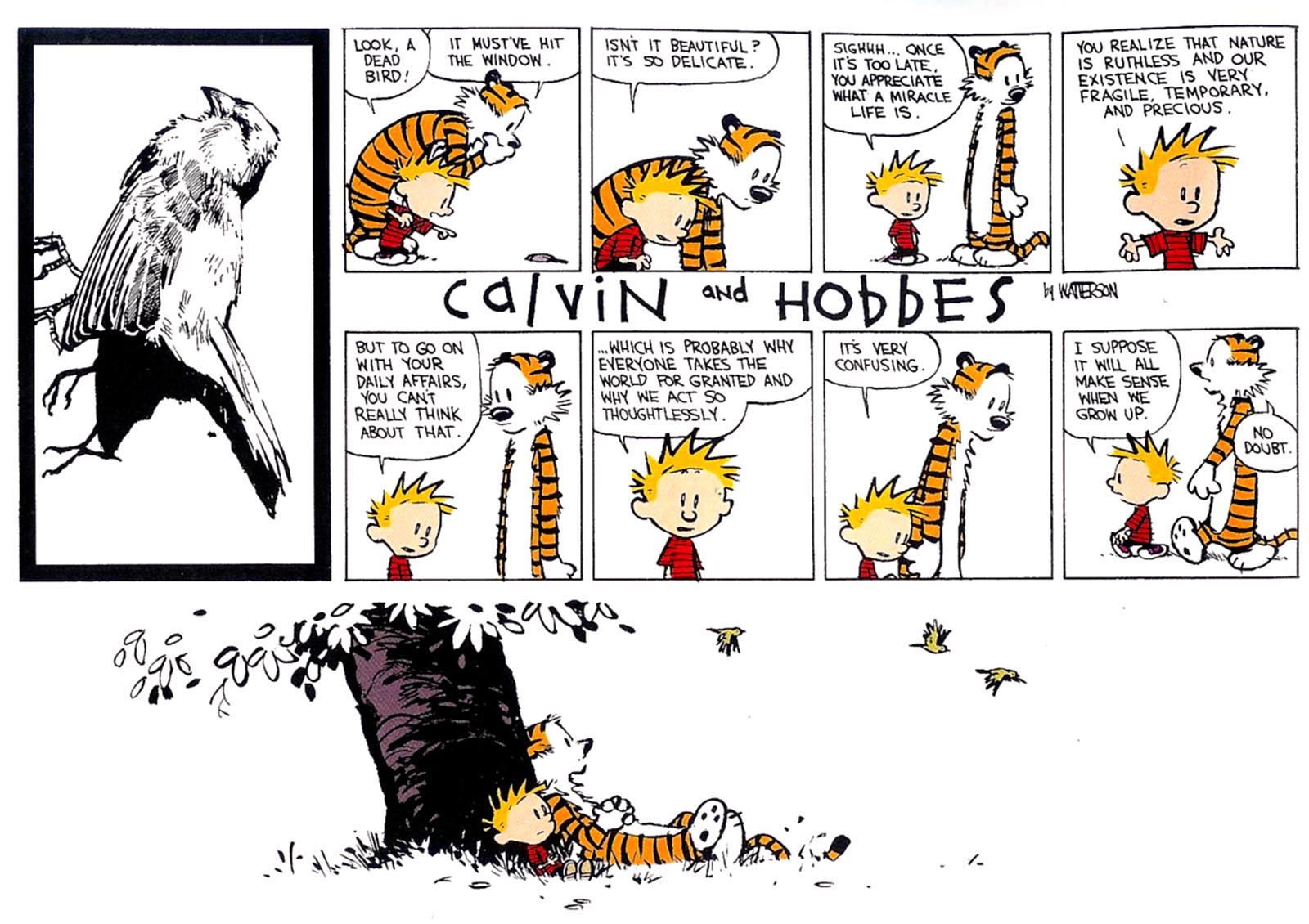
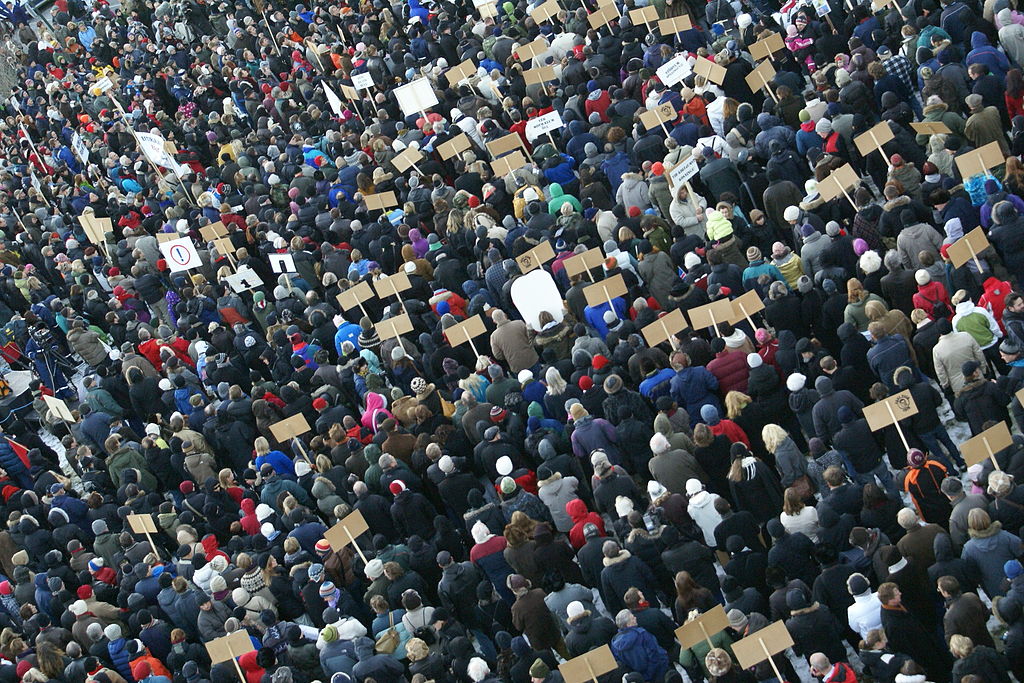
© OddurBen / CC BY SA 3.0

The thing that strikes me most about the present and—say—the last ten years in global society—is just how angry everyone is. Political leaders, commerce figures, populations, press, civil society, religion… everywhere you turn, they are increasingly angry.

Generously deliberative disagreement has virtually disappeared, as has the witty form of “debate-banter” that once graced the airwaves regularly between public intellectuals. Conversations in which friends hash out their differences in verbal and evidentiary sparring have given way to immediate friendship breaks—this person can’t in good conscience be friends with a “bigot” while the other won’t countenance a minute longer in the company of a someone that wants to “destroy civilization” and so on.

The opinion columns of the news press and the endless writing of the editorial and magazine press are filled not with questions and points of reflection but with strident answers and desperate calls to panic and to action. Everyone, on all sides, private and public alike, declares repeatedly a state of emergency.

Candidates for office, already elected officials, captains of industry, activists and volunteers, voting factions, and indeed entire voting populations are all hated by other voting factions and entire voting populations.

Everyone is strident. Social trust and charity have broken down. Sometimes, say on Facebook or in polite company, anger masquerades as so much high-mindedness, but hardly anyone is fooled; such high-mindedness only too obviously serves as cover for deep resentment with the unenlightned; it is invariably aggrieved virtue-signaling for present company rather than moral munificence.

It is an ethos of taking-to-the-streets, of judgment, of endless protest and self-justification. The question is which came first, the activism or the indignant angst? For surely both are now universal forces in a way that is historically unusual at the aggregate micro level. It begins to seem as if the whole place is gradually becoming a powerkeg of afflicted atoms on all sides.

I am a product of my time.

In general, this makes me sad because I simply don’t like my time. I’ve always felt that way, but in recent months the feeling has become much, much more acute. Weber spoke of the disenchantment of the world, and modern sensibilities tend to imagine this as a regrettable necessity if we are to arrive, finally, at an enlightened world.

They take far too much for granted. There has been zero progress toward enlightenment, even if enlightenment itself is the panacea that it is so often taken for granted to be.

The world has been disenchanted, yes, but only disenchanted. It is not that the end of enchantment necessarily also ends ignorance. Instead, we have replaced an ignorant world and population that were at least at times enchanting with an ignorant world and population that are distinctly ugly, gray, and callously self-serving.

— § —


© Aron Hsiao / 2008

What’s left is nature, or what remains of it as we have known it (the troubling fact being that nature itself is no more vulnerable to us than it has ever been, and that we have known it only in its most human-friendly mood), as the climate shifts, the cloud cover flees to the poles, undeveloped spaces are replaced by consumer spaces, and the rate of species extinction reaches shocking proportions.

But in what’s left of nature as we have known it, there remains some enchantment that we are able to comprehend, even if we try—with all of our indignant and moral might—to stomp this enchantment out as so much injustice.

The deep greens of the springtime flora remain, as does the scent of cool humidity at dawn, the stars in the sky, the breath and rustle of the wind. These things remain. They are ageless, they are biased, they are prejudiced and unenlightened and totalitarian. They traffic, celebrate, and evince laws, hard boundaries, and immutable essences, those things that give such affront to modern sensibilities, as singularly concerned as we are with the misguided value of individual freedom and individual self-identity.

Since time immemorial mankind has known that nature was a brute—now, just when we are careening toward the greatest display of its brutishness, we have lost—or should I say, we lie to ourselves about—this essential knowledge. It obtained until late modernity, at which time the impulse to cover nature over with an ideological veneer more amenable to our adolescent tantrums led to two natures—benign nature, which somehow cures every disease if you breathe just so or rub just the right leaves on you, and which understands how to mend broken hearts, broken societies, broken childhoods, and so on—and “old” nature, the one that used to kill people, which we swept away through some unmentioned means during—civil rights, was it? Or the end of the cold war? In any case, it was during some progressive period that the enlightened power of mankind led nature to reject its former hatefulness and embrace the progressive agenda and our universalist world of tolerant peace and individual striving toward the ability to virtue-signal.

Only this is, of course, bullshit. The former image—that of nature as Buddhist monk—is a fabrication of the Western elite social justice class, protected as they are in their consumerist bubbles. Nature remains a brute. That is the reason—the only reason—we have ever loved it, and at the same time the reason—the only reason—we must so industriously lie to ourselves about it now.

We want so badly not only to escape nature’s definition of us, but in fact to neuter nature as well because we perceive nature as it is, unmentionable as it is in any honest way, to be illiberal, unequal, and unyielding. And at the same time, we secretly long for nature’s riches, which we rightly perceive to be hidden from us just now, but which we refuse to admit to ourselves consist almost entirely of enchantment and individual helplessness—those things that speak to us of our own solidity, unimportance, unfreedom, and mortality.

You know, the concepts that are politically and consciously anathema that the entire West tries, day in and day out, to repress, work around, legistlate away, and protest against.

Nature is, of course, illiberal, unequal, and unyielding. Period. And somewhere deep down, a few people still realize this. That is why, in fact, it is beautiful. That is the very nature, as it were, of the sublime.

We’d do well to learn a thing or two from this fact, if it’s not too late.

“The preservation of the United States and the West requires the renewal of Western identity. The security of the world requires acceptance of global multiculturality.”

Huntington had it right. Most of the cultural elite are too far down the rabbit hole of to even consider the possibility.

At the most fundamental level, moral hazard—both individually and collectively—is at the root of the vast majority of serious problems that society faces today.

Is it possible that it’s not possible to do any good in the world at the end of the day, that “help” is, in fact, always an illusion, that reality is wired such that all individuals must bear crosses, no matter what?


© Aron Hsiao / 2006

The thing I hate most about the cultural present in the west is the embrace and rationalization of failure and flaws.

Social media shares a huge part of the blame here, but so does the culture at large. We live in a “feel-better, it’s-okay” culture. I’m guilty of participating in it, but not as much as some.

Whatever you’ve done that’s wrong—it’s okay. Whatever your failings—they don’t matter. In fact, quite the opposite. Whatever is wrong with you, there are two dozen Facebook memes a day to make you feel better about it. Your weight. Your temper. Your divorce. Your laziness. Your social withdrawal. Whatever. Someone—and likely thousands of someones—are out there telling you and everyone else that it’s okay, that you shouldn’t be blamed, that this is a difference to be embraced, and so on.

It’s too much. It’s too far. There are zero sins any longer. Or at least, very few. One can imagine a time in the not-so-far future when there are Facebook memes that say, “Killed someone? You are not alone. Behind every murderer lies a sensitive heart in pain!,” and “Some call you a rapist. But you know that you are a victim—a lonely, disempowered person who had poor role models and never had a chance. Embrace your inner child. The rape you committed does not define you!”

No doubt these will lay over silhouettes of the Buddha or outline graphics of green trees and leaves.

This is the bullshit of the SJW world that we live in. And it is bullshit.

There are bad things. People do bad things. Bad. And they ought to be ashamed. This culture that says that “Your sins do not define you!” or that tries to assure every sinner that “You are a victim, not a monster!” has to go.

Understanding and empathy, sure. But also ethics. Morality. Wrong is wrong.

I expect to be held responsible for my mistakes. I will stand up, face my children, and admit that I and their mother fucked our marriage and their lives up entirely. I expect no one to justify this with an explanation of our “victimhood,” and I will vomit if my children try someday to tell me that “it’s okay.” Because it isn’t. Wrong is wrong.

There is no belief in “wrong” any longer in our society. No willingness to even countenance the thought. Nobody is ever wrong. Everyone is just misunderstood. Under such conditions, society is not possible because trust is not possible. Because no matter how tolerant and accepting everyone is, if you know that the fellow human beings around you may hurt you, even if you don’t believe they’re wrong for doing it, you are not going to collaborate with them—be sociable with them—in the same way.

Radical tolerance, acceptance, and embrace are the path to social anarchy and warfare through the backdoor. For society to work, wrong must be called wrong, and everyone must know it.

So basically—the next time someone on Facebook tells you that you’re a victim and not a free agent, that your wrongs are merely misunderstood rights or were unavoidable given your background—ask yourself whether you want to live in a world in which everyone forgives wrongs against you, your family, or your children on the same grounds. Ask yourself whether you will be able to trust anyone else in a world in which there are no wrongs and all actions by any free agent are permissible and must be embraced.

Tolerance? Tolerance within certain well-defined parameters enables the maintenance of the nation under conditions of globalization and multiculturalism. But culturally mandated tolerance of every difference and every choice and action? That is pure and in fact imposed social darwinism, disguised as enlightenment.

This is madness. I hereby leave the left. It has gone off the deep end. As of now, I am a conservative, albeit of a different stripe than those in national politics. Because I actually believe that ethics, morality, justice, and society ought to be conserved.

— § —

Corollary: Maintaining an inner mental map of the territories of right and wrong is hard. Trying to live them is even harder. People will hate you for it. This is the world we live in. The one thing that the tolerance culture can’t tolerate is someone that believes in right and wrong, prior to “talking things out” or “embracing difference.”

It is seen as bigotry, prejudice, hate, xenophobia, you name it.

Well that is me. I am a bigoted, prejudiced, hateful, xenophobic person that actually believes that there is a Right Way to do things and that it is Honorable(R) to try to live a life of things done the right way. I won’t give it up. Even if they kill me. Certainly they’re trying, over the years.

I don’t think I’ve had a friendship, relationship, or job that ended, ever, for any reason other than that I was firmly committed to doing things the right way, prior to any commitments involving empathy, tolerance, social justice, etc.

But it is in my bones. It is the core of who I am. I am the person who tries to do the Hard and Painful Shit That is Right, even if it kills me.

And kill me it probably will, eventually.


© Aron Hsiao / 2006

Weird night of dreams last night and a weird day of sensations today.

The best analogy that I can think of is that I feel like a high school student or a college student that has suddenly realized that they have seriously fucked up.

Do you remember it? That feeling that you got when you arrived at class and the instructor asked everyone to hand in their term papers, and everyone began to shuffle to the front of the room except for you, because you had spent the weekend skating in the park or watching television after reassuring yourself—without any actual grounds for doing so—that you didn’t have anything coming due on Monday. And now here it was Monday and you were without your paper and recalling the instructor’s adamant warning that no late work would be accepted and anyone without a term paper on Monday would flunk for the term.

So there you sat realizing that you had flunked. And you knew it. And a pit sat in your stomach. And you stared straight ahead and tried not to think about the only thing that you could possibly, at that moment, think about. And you tried not to feel exactly how you felt, which was full of dread and crude oil and mercury.

That feeling.

In fact, it’s not entirely an analogy. I have been having these weird moments in which I actually am convinced that I’ve forgotten something or made some sort of terrible mistake that is just on the edge of consciousness and then I mentally sit down and prepare for my unconscious to deliver the memory of just what it is that I’ve just catastrophically fucked up without remembering it, something that is so terrible that my whole life will be affected.

And then, a moment later, I realize that there is no such unconscious thing. There is only one dreadful thing going on in my life right now, and I am fully conscious of it, and it is not in any sort of state of having been ignored or forgotten.

They are sort of like phantom pains, these momentary impulses of panic. They are the vestiges of worries that are so big that the conscious mind isn’t able to hold then in their entirety, so they take over the subconscious as well, and come out as all sorts of other worries that make no sense whatsoever once they come to consciousness.

I woke up with the feeling that something important had been stolen and I needed to report it to the police. Later in the day it was the feeling that I’d missed a very important bill and was in for severe penalties. Then I suddenly felt as though I’d forgotten an important medical test or task that could have life-threatening consequences for me.

And so on.

Yet on ten seconds of reflection, in each case I realized that there was absolutely nothing of the sort going on. The feeling of dread was not related to the circumstace that for a moment I’d impulsively “recalled,” but—upon full and actual recollection—I understood that the circumstance creating the feeling was, in fact, divorce, pure and simple.

The assessment failed. The thing stolen. The unsettled bill. The creeping pathology. And so on. They’re all so many thousand metaphors. My subconscious mind is working overtime to try to get me to do something about it, and of course that sensation of failure and too-lateness, that darkness, comes from the fact that in fact it is a done deal, it is too late.

My subconscious simply hasn’t received the message yet.

Funny how the mind works. I thought that it had “hit me” already, and indeed that it had been “hitting me” for months. But now I suspect that there will be another wave or three of it “hitting me” as my subconscious mind gradually gets hold of the realization that it is too late for us and that there is, in fact, well and truly nothing any longer to be done ever again.

Finality is so… final.

— § —

I gave everything I had to my marriage. I have few regrets. Everything I had, and then some, and then some more. I poured every last drop of blood, sweat, and tears into it. I believed. I was committed.

But in the end, it wasn’t enough. That’s my biggest regret. And it is also an echo of the illusion that has been shattered. That perhaps two people can pour everything they have into a marriage and in the end be miserable—and, more to the point—unable to survive together nonetheless.

It is a sad, bewildering thing.


© Aron Hsiao / 2011

Well, we did it.

Today at noon we engaged in an act of wanton destruction that will echo throughout the rest of our lives, and through the lives of our children, and likely future generations after that.

At the end of the day, I have no coherent, intelligible explanation for any of it. When I was younger, I hated the genre of historical justifications that went, “It’s impossible to explain; you just had to be there.”

Now I find myself understanding precisely where such justifications come from. There is no reason, no way to conceptualize it. It simply is. In the swirl of events that is time, things happen and, as a result, other things happen, and ultimately—and particularly when there are people involved—history takes on a life of its own, often to everyone’s ultimate horror, though it remains impossible in retrospect to establish precisely when such horror creeps in.

— § —

Here we are in a tent for the third night in a row, in the outdoors, by reason of no necessity.

It is as though we—I—have conspired with fate to step out of my life while this was to happen, to enter a liminal state, to resign myself to nature and bare humanity to make this even plausibly imaginable without going insane.

And so I type, in utter darkness, with lumps of dirt and grass beneath me and crickets droning on and on about the justice they’ve been seeking but can never find, shivering and sore.

The children are warm and snoring in sleeping bags. I refuse to crawl into one.

I demand, tonight—demand—to be cold. To feel what is real.

— § —

It is a conceit, yet I have new empathy for those that are forced, in whatever area of life and the world, to make difficult decisions.

To drop bombs with the risk of collateral damage.
To send young people off to war to kill or be killed.
To sentence someone to be executed.
To shutter the last factory in the town, sentencing it and its families to slowly disappear.

Yes, as I said, it’s a conceit. And at the same time, within the context of my own life and my childrens’ lives, it is equally tragic.

And what do all of these things have in common? A kind of helplessness. The total impossibility of doing any sort of right thing at all, particularly when one is playing chess against fate and is already in check.

The die cast, it can appear and feel as if no matter what you do, the result will be the same, or perhaps even worse. Finally and reluctantly, when the best off ramp you’ve seen in a very long time comes along and offers even the smallest promise of respite, you simply take it, covering your eyes and praying as you do so.

No doubt you then regret, bemoan, and second-guess your choice forever, knowing at the same time that in the moment you were sure that there was no better choice, that there was unlikely ever to be a better choice, and that you had only an instant, in the grand scheme of things, to make the impossible decision.

Catastrophe. Utter catastrophe. Circumstance masquerading as agency. And meanwhile the stupid hairless monkeys drone on about the E.U. and Foucault and the price of crude oil and the politics of race. It’s all nonsense. It’s all bullshit. All of it.

Yes, I’m being dramatic. Because it . is . fucking . dramatic, and it always will be.

The end.

— § —

“Here we go round the prickly pear
Prickly pear prickly pear
Here we go round the prickly pear
At five o’clock in the morning.

Between the idea
And the reality
Between the motion
And the act
Falls the Shadow

For Thine is the Kingdom

Between the conception
And the creation
Between the emotion
And the response
Falls the Shadow

Life is very long

Between the desire
And the spasm
Between the potency
And the existence
Between the essence
And the descent
Falls the Shadow

For Thine is the Kingdom

For Thine is
Life is
For Thine is the

This is the way the world ends
Not with a bang but with a whimper.”

(T.S. Eliot)

It’s pretty hard to be philosophical about life right now. I don’t know that anyone has their emotional bearings. Trying to make sense of things—right, wrong, sensible, not sensible—is difficult.

I don’t think I got the right kind of training or socialization in life to be able to navigate waters like this with aplomb. I’m not detached enough. Not clinical enough. I experience everything emotionally, then have to run interference between my feelings and my mind.

— § —

They say that you need to “live in the present,” but there is a weird psychological phenomenon, at least for people like myself, by which the present comes to encompass both the past and the future in their entireties.

It is as though all of time is happening at once.

Sometimes when I speak with others from radically different backgrounds, it becomes so very clear to me that they don’t experience the world in this way at all, and that my description would make absolutely no sense to them.

— § —

“Out through the fields and the woods
And over the walls I have wended;
I have climbed the hills of view
And looked at the world, and descended;
I have come by the highway home,
And lo, it is ended.

The leaves are all dead on the ground,
Save those that the oak is keeping
To ravel them one by one
And let them go scraping and creeping
Out over the crusted snow,
When others are sleeping.

And the dead leaves lie huddled and still,
No longer blown hither and thither;
The last lone aster is gone;
The flowers of the witch hazel wither;
The heart is still aching to seek,
But the feet question ‘Whither?’

Ah, when to the heart of man
Was it ever less than a treason
To go with the drift of things,
To yield with a grace to reason,
And bow and accept the end
Of a love or a season?”

(Robert Frost)

— § —

There is so much pretense in the way that humans tend to exist with each other.

If I think about it enough, I start to imagine that this is the nature of dwelling in the world as Heidegger imagined it. To dwell is fundamentally to engage in a kind of pretense about the human experience.

I suppose, at the end of the day—and without wanting to descend into nihilism necessarily—that the arc of a human life is itself pretense, given its nature. One can’t reject pretense out of hand without rejecting life.

And yet, at the same time, it seems obvious to me that there is some threshold—and it is not a high one—beyond which pretense becomes the way that we all lose ourselves, each other, and everything we might value about being in this world.

— § —

But whatever. It’s nearly 11:00 pm on the night before the day and I am outside in a tent.

I don’t know anything about anything.


© Aron Hsiao / 2016

My daughter has been asking, over and over again, when we can go camping. So I’ve told her that we can go this summer and have acquired a tent and some over-the-fire grilling skewers.

But it didn’t seem like a good idea to head straight for the mountains for our first outdoor camping adventure, so this week we’re doing a dry run in the backyard, on the lawn.

As luck would have it, we’ve picked a reasonably chilly, windy night with off-and-on sprinkles to begin. My senses tell me that it’s simulating the high country camping experience quite well, when all is said and done. The air inside the tent is bracing and the leaves haven’t stopped rustling.

With the kids zipped into their sleeping bags and asleep to the left and right, it’s just me that’s awake, hearing the sounds and feeling the sensations of nature.

— § —

It’s been a long time since I did this. Over the course of our marriage there was one night of sleeping in the backyard, but it was a still, hot night on which fireworks were expoloding in the background, and the tension was already very thick.

This, tonight—is different. It feels like camping once again, and I’ve not been on a proper mountain campout since 2001. That’s fifteen years!

— § —

So, the days are passing. A wedding here, a divorce there, a job here, a car repair there. Life goes on.

The leaves, they are rustling everywhere outside the tent.

This is my life, that I am living right now, for better or for worse. I suppose it is for both, at the same time.

And it’s another Monday tomorrow.

And in the meantime, backyard camping, and a chance for me to actually feel something of nature once again. It is quite beautiful.

Life is a difficult thing, and some of us get better life education than others.

There is significant resistance to the (I’ll call it stereotypically British) attitude that sentimentality is rarely, if ever, helpful in life. Some of us learned this well from our parents, and others did not. I, for one, did not, though I learned it better than some (say, a few) others.

As I get older, I realize that much of what passes for modern “wisdom” on relationships is entirely wrongheaded. Sympathy, empathy, communication, etc. can not get us to the promised land. The fact is that people are different, and generally have different (and equally valid, yet competing) interests and values in life. There are only two choices:

– A totalitarian imposition of normativity, so that we are all the same.

– An acceptance of difference buttressed by time-honored rules that preserve our ability to survive such difference.

If we are not to pursue the former (and, historically, we haven’t, and the values of our society point in directions other than this), then we must pursue the latter. In the case of the latter, rules of social interaction and relationship, which can at times seem to be impersonal or unfeeling, guide us in ways that enable us to differ while minimizing hurts, anger, and conflict.

This is essential if we are all to get along, and if we are to preserve society and the healthy socialization of the younger generation at any particular moment.

What I mean to suggest in this post is that it is right and good, at the end of the day (and despite my reservations over the years) that people should be polite and convivial rather than intimate and emotive in most cases. This is something that I’ve bristled at over the years at times—usually, and self-servingly, when I’ve been in the most trouble of one kind or another. In fact, polite, convivial, and indirect it is the only way.

The only way.

If we are to have a society, if we are to preserve our sanity, if family and community are to be made to work, then the old-world tradition of civility, restraint, and boundaries in the face of life difficulties is of paramount importance. It stands merely to reason that one of the world’s great empires might implicitly outline a system of mores for coping with multicultural status quos. The stereotypically British colonial and classist mores of communication are in fact the best we’ve ever created as a species for the prescribed purpose, and they are goods to aspire to rather than regressive backwardness to be overcome in the interest of social justice and self realization.

And I’ll go a step farther and sound like a conservative by saying that, in fact, social justice as currently constituted is a sham. It is not justice but rather warfare, and no good can come of it. People must know their place, myself included. Self-realization doesn’t even enter into the picture; it is, as constituted, a silly and immature game.

Yes, I am making a value judgment. I hereby abandon cultural relativism, at least within a particular historical and geographical context. I declare one culture and set of norms to be better than the rest, and I advocate openly for them. I do this without reservation.

— § —

Also backward: people who won’t think deeply about, reason about, or adhere to formal and/or informal (at the very least) logic about conflicts and crises.

You cannot form a society on the basis of impulse and self-care. You simply can’t. It’s bullshit.

Busy day, and a lot to think about.

Tomorrow will be another busy day, also with a lot to think about.

— § —

Anyone that knows me knows that I have a unique talent for losing track of things. Now I have lost something important. A book. The most important book, in fact.

I look high and low, but can’t seem to figure out where I’ve placed it.

This is one thing that I definitely don’t like about myself. Someday when I grow up, I’m going to stop losing things.

— § —

Now, at the end of the day, I suddenly feel exhaustion creeping in. Or rather, I feel the lack of exhaustion retreating before reality’s advance.

Exhaustion is, after all, the default state of my life right now.

Until tomorrow, world.

So I’ve been trying to decide whether to keep the Tab S2 8.0 or the Tab S 8.4. In terms of features, the S 8.4 has the S2 beat: larger battery, light/flash, larger screen area, better build quality, and so on.

But despite AnTuTu benchmarks saying that the two were very similar in their raw performance, the S 8.4 has felt dog slow in comparison to the S2.

So after spending a few hours updating the kids’ old Galaxy Tabs to CM10, today I took the step of installing CM12.1 (Android 5.1.1) on the S 8.4. There is an unofficial build of CM13 (Android M) as well, but some reading on XDA suggests that there are power management and battery drain issues there, so I went for the more established build.

And it feels like a new tablet. In every way. Snappy, snappy, snappy without all of the Samsung bloatware. And I get to leave TouchWiz behind as well. And everything works. Awesome.

I think my choice is made, and for anyone considering making the jump, I highly recommend CM12.1. One note: there are newer unofficial nightlies out there than the ones listed on the official site. Search through the threads at XDA to find them.

Archives »

May 2026
April 2026
March 2026
February 2026
January 2026
December 2025
July 2025
May 2025
April 2025
February 2025
January 2025
December 2024
October 2024
September 2024
August 2024
July 2024
June 2024
May 2024
April 2024
March 2024
February 2024
January 2024
December 2023
November 2023
October 2023
September 2023
May 2023
April 2023
March 2023
January 2023
December 2022
November 2022
August 2022
June 2022
May 2022
April 2022
March 2022
January 2022
December 2021
November 2021
September 2021
April 2021
March 2021
February 2021
January 2021
December 2020
November 2020
October 2020
September 2020
August 2020
July 2020
June 2020
May 2020
April 2020
March 2020
February 2020
January 2020
December 2019
November 2019
October 2019
September 2019
August 2019
July 2019
May 2019
April 2019
March 2019
February 2019
January 2019
December 2018
November 2018
October 2018
September 2018
August 2018
July 2018
June 2018
May 2018
April 2018
March 2018
February 2018
January 2018
December 2017
November 2017
October 2017
September 2017
August 2017
July 2017
June 2017
May 2017
April 2017
March 2017
February 2017
January 2017
December 2016
November 2016
October 2016
September 2016
August 2016
July 2016
June 2016
May 2016
April 2016
March 2016
February 2016
January 2016
December 2015
June 2015
February 2015
January 2015
December 2014
October 2014
September 2014
August 2014
July 2014
June 2014
May 2014
April 2014
March 2014
February 2014
January 2014
December 2013
November 2013
September 2013
August 2013
July 2013
June 2013
May 2013
April 2013
March 2013
December 2012
November 2012
October 2012
August 2012
July 2012
June 2012
May 2012
March 2012
December 2011
October 2011
September 2011
August 2011
July 2011
June 2011
May 2011
April 2011
March 2011
February 2011
December 2010
November 2010
October 2010
September 2010
August 2010
July 2010
June 2010
May 2010
April 2010
March 2010
February 2010
January 2010
December 2009
November 2009
October 2009
September 2009
August 2009
July 2009
June 2009
May 2009
April 2009
March 2009
February 2009
January 2009
December 2008
November 2008
October 2008
September 2008
August 2008
July 2008
June 2008
May 2008
April 2008
March 2008
February 2008
January 2008
December 2007
November 2007
October 2007
September 2007
August 2007
July 2007
June 2007
May 2007
April 2007
March 2007
February 2007
January 2007
December 2006
November 2006
October 2006
September 2006
August 2006
July 2006
June 2006
May 2006
April 2006
March 2006
February 2006
January 2006
December 2005
November 2005
October 2005
September 2005
August 2005
July 2005
June 2005
May 2005
April 2005
March 2005
February 2005
January 2005
December 2004
August 2004
July 2004
June 2004
May 2004
April 2004
March 2004
February 2004
January 2004
December 2003
November 2003
October 2003
September 2003
August 2003
July 2003
June 2003
April 2003
March 2003
February 2003
January 2003
December 2002
November 2002
October 2002
September 2002
August 2002
May 2002
April 2002
March 2002
February 2002
January 2002
December 2001
November 2001
October 2001
September 2001
July 2001
June 2001
May 2001
April 2001
March 2001
February 2001
January 2001
December 2000
November 2000
October 2000
September 2000
August 2000
July 2000
June 2000
May 2000
April 2000
March 2000
February 2000
January 2000
December 1999
November 1999