耀
a
r
o
6
e
d
g
2
l
p
a
n

a
r
o
n
h
s
i
a
o
w
a
s
h
e
r
e


© Aron Hsiao / 2001

“Time does not suffer itself to be halted; there is no question of prudent retreat or wise renunciation. Only dreamers believe that there is a way out. Optimism is cowardice. We are born into this time and must bravely follow the path to the destined end. There is no other way. Our duty is to hold on to the lost position, without hope, without rescue, like that Roman soldier whose bones were found in front of a door in Pompeii, who, during the eruption of Vesuvius, died at his post because they forgot to relieve him.”

(Oswald Spengler)

Things that were said today by a five-year-old:

“The story of life goes like this. First there were the tiny things. Then they went into the oceans and grew. Then they came out and became the dinosaurs. Then the mammoths, then the cavemen, and then the Indians. And then us. Now here we are.”

Not a bad retelling, actually.

Also, this exchange, about twenty minutes later.

Me— “Let’s see if it’s really a sale or just a marketing tactic.”

DD— “What’s a marketing tactic?”

Me— “That’s when people tell lies to get you to give them more money.”

DD— “That sounds like the story of life, too.”

Once upon a time, I’d have posted stuff like this on Facebook. But I am so Facebook-averse right now I can barely force myself to log on once a week.

That’s the story of life as well.

So a couple of years ago on eBay, Samsung Galaxy Tab CDMA units (Sprint especially) were going for peanuts—like $20-30 shipped. These are good tablets for the money, far better than the Chinese import models in component, screen, and build quality, and we picked up a couple (plus a spare) for the kids to have tablets.

Unfortunately, they’ve always been a bit slow due to TouchWiz and Samsung bloatware, and now Android Froyo (vendor ROMs maxed out at Android 2.x) is starting to get old enough that some kids apps from the Play Store are no longer supported. I’ve always meant to bite the bullet time-wise and see if I could get these upgraded to something better by rooting and using a custom ROM, and now I have.

I have the last CM10 (Jelly Bean) nightly running on the spare right now after a couple hours’ experimentation. Everything seems to work, thought we don’t use the CDMA, and it’s far snappier, and very cool to see a “modern” version of Android running on the thing. Unfortunately, the universe of the original Galaxy Tab (especially CDMA units) is getting old at this point, and also disorganized.

  • It’s hard to see what the “best” path is to root+CWM+CM10
  • There appear to be a lot of variants
  • There is a lot of misinformation
  • There are a bunch of corrupted .tar.md5 files out there as well

— § —

It’s actually a lot simpler to get there than I thought. Here’s what you need to do.

  1. Visit this thread on xda-developers. Don’t bother with the links in the first message—they lead to corrupted downloads. But buried at the top of page 36 is this link to a Google-hosted ZIP file that actually contains a working .tar.md5 file for root+CWM recovery to get started. Download and unzip the file.
  2. Go to the official source and get the last CM10 nightly for the “p1c” platform (you can just search Google for “p1c cm10 nightly”). Also download the gapps version for CM10 (you can search google for “gapps cm10”). Both of these are ZIP files.
  3. This is the trickiest step in many ways. Inside the CM10 ZIP file, you need to edit the file META-INF/com/google/android/updater-script to remove a spurious assertion—otherwise, CWM will refuse to install the CM10 ZIP. The first four lines of the file (everything before the first semicolon) have to go. The problem is that ZIP utilities are unpredictable in their behavior, and most peoples PCs aren’t case-sensitive (while the ZIP file is) so unzipping the whole package and then rezipping it won’t work for most people (don’t try it). If you’re on Unix/Linux or similar, you can unzip just that file, edit it, and rezip just that file (with full path) back into the archive. On Windows or Mac without the command line, you’ll probably have to find a utility that lets you edit text files inside a ZIP “in place,” without unzipping the entire file. Whatever you do, you’ll need to edit the updater-script file within the ZIP file, preferably minimally touching the rest of the ZIP, to remove that spurious assertion.
  4. You now have your files. Copy the CM10 ZIP and the gapps ZIP to an SD card and insert them into the Galaxy Tab.
  5. Run the Odin binary enclosed in the ZIP you downloaded in step (1), either in Windows or in a Windows VM.
  6. Power the Galaxy Tab down, then power it back up again while holding the Volume-Down button. You’ll get a screen-filling yellow warning not to turn off your device. There are no options.
  7. Plug the device into USB. You should see Odin recognize it. Click “PDA” and select the .tar.md5 file from the ZIP that you downloaded and unzipped in step (1). Take care to UN-check repartitioning. Then, click Start to install the .tar.md5.
  8. When Odin confirms that you’re done the Galaxy Tab reboots, you’ll be in a weird state—when you boot up, nothing works, endless app crashes. However, you can power down. So power down. Then, hold the Volume-Up button and power back up again. You’ll boot into CWM recovery.
  9. In CWM recovery, opt to install ZIP files from your SD card. Install first the CM10 distribution ZIP, then install the gapps ZIP.
  10. Do a full cache wipe and a full data reset to start fresh.
  11. Finally, reboot. You now have CM10 working on a CDMA Galaxy Tab. No promises on CDMA service, though the bars indicator seems to work. And you have root and also CWM recovery 6.x.

It’s taken me a couple of hours to find the right path, but now that I’ve found it, I can CM10 the next two tablets in about 10 minutes each… Though I’d better ask the kids first. It’s one thing to revolutionize the spare, but it may be quite another to touch their own personal tablets, even if some of their favorite apps have now been updated beyond Froyo compatibility.

So we will without a doubt have a compulsive lawbreaker with no integrity as president.

The only question is our pathology preference—the narcissistic criminal (Trump) or the sociopathic criminal (Clinton), which one to choose?

It’s all so emblematic of where civilization is right now.

Earlier this afternoon I read another article, this time in the Atlantic if I’m recalling correctly, that talked about life in terms of a series of particular stages:

  • Learning and development (teens)
  • Ideas and vision (20s and 30s)
  • Exposition, development, and writing (40s and 50s)
  • Teaching (60s and onward)

This isn’t the first time I’ve heard (or read) this bit of wisdom. In fact, I’m not sure I can count how many times I’ve heard something essentially similar to this. In this case, the author was reflecting on their experience amongst professional writers and journalists, saying that in effect this rang true.

I suppose there is something to it all. By the time I was finishing my Ph.D. I did feel as though my brain was different from what it once had been. And this does seem to be a period in my life in which I’m more attuned than ever before to the practice of communication, and in which I feel compulsions to write, even if I’m not writing much in particular at times.

But it does make me wonder what lies ahead. It often feels as though most of my life hasn’t really been in any of these stages, but has rather been about “problem solving.” Problem solving not just in personal life and in career life, but even my career itself seems to have been a series of posts in problem-solving—mainly small logistical and practical problems, with little room for my own ideas or vision. The Ph.D. was the first time I really got to exercise those parts of me.

Given that it took me so long (nearly my first four decades) to arrive at a place at which I could express ideas (I’ve always had many) and actually have people pay attention to them rather than deign to listen to them as a matter of relative status differences, I’m not sure I’m quite ready to give the “ideas” part of life up so quickly.

And yet it’s also true that I have felt my mind evolving over the last few years. I don’t mean in terms of feelings or opinions or politics, though I mean those too, but also in terms of the way that it works. It has become much more restrained, more stable, more patient, which is all good—and at the same time far less passionate or intense.

I suppose this is what they call “getting older,” and (I can now more clearly see) why so many people become more measured and conservative as they age. Your mind just feels differently from the way that it used to feel, and it leads to different modes, habits, and outcomes of thought.

— § —


© Kamil Macniak / Dreamstime

The other way I can measure my increasing relative age is through my attachment to email.

Because of my unique background, I came of age in email. During my most formative years, from the time I was nine or ten years old all the way through my teenage years, email was how I communicated with all of the most interesting, important, and infatuation-worthy people in my life.

This now manifests as a constant feeling of annoyance with text messaging and with Facebook, which intensifies the older I get.

Everyone wants to communicate through text. Nobody even reads email.

Yet every thought or communicative impulse that I have I imagine in email-sized chunks and visualize first and foremost as email in an email window. Mine is an email brain. While it’s worlds away from fountain pens and blotters, I still live in a mental universe of letters and letter-writing.

I don’t have thoughts as short as texts. When I text with people, I tend to translate emails into texts, plugging in a keyboard and sending dozens of lengthy texts all in a row, boom, boom, boom, as though I were pounding out an email.

I always wake up at some point in the midst of this behavior and realize that what I’m doing seems bizarre and unhinged on the other end if the person is of the “text” generation.

Why is he throwing sentence after sentence at me without letting me get a word in edgewise, littering up my phone?

Because I think in groups of 800-1,500 words, and I presume, unless I actually sit down and think about it, that you’ll read them and send the same back in a day or two.

Of course you won’t; if I’m texting with you and send you 20 texts in a row of 50 words each, you’ll write something right back, right away which always also throws me. I’m never expecting that immediate response. Intellectually I know that you could do that, but it always bursts my expectations when it happens. Because after that last text I’ve sent your way, I’m saying to myself, “Whew, that’s said, now I’ll go and do something else and tomorrow I’ll read what they think in return.”

But of course it doesn’t come tomorrow, and it (appropriately, in the formal sense) doesn’t actually contain much thought much of the time—just a single brief text in return, as is appropriate for texting.

I’m the contemporary equivalent of the letter-writers who stuck doggedly to their pens, pads of letter paper, and wax seals years after everyone else was talking on the telephone.


© Aron Hsiao / 2002

People tend not to appreciate clarity when they have it. It’s taken for granted; it becomes a part of the background of everyday life. It seems so self-evident, and even more to the point, it often points toward what-is-to-be-done, often not done yet, and so can even seem to have something of an irritating character.

There have been times in life when I wished that I was more hazy, or that I was “one of the clueless people” so that I slid through life with only a vague idea of what might be happening.

That sort of wishing is beyond stupid.

It is only once clarity is gone that it becomes clear just how much worse life is without it. Even if clarity tells you that you are both miserable and sunk, you are at least left with the courage of your convictions and an understanding of yourself and the world to which you can refer.

At this moment in life, I live without clarity, and it is terrible. Not knowing the good from the bad, the right from the wrong, the desirable from the undesirable, moment by moment; not having any idea which action is the right action and which action is the wrong action—these sorts of ambiguities make life miserable.

The thing that I long for most in life right now is clarity. Clarity of memory, clarity of purpose, clarity of belief, clarity of understanding, clarity of initiative, and of course clarity of future, which everyone would love, to some extent, but I’d certainly settle for the rest even if clarity about the future is impossible.

To not know what you think or believe, to not be able to weigh the things that you know and remember—it is an unsettling feeling.

— § —

The fireworks are going off. It’s summer but it’s not too hot. The car is running. My career is reasonably sound.

It should be a fairly good season in life, but of course it isn’t right now.

— § —

I wrote another chapter today. It’s funny, with fiction.

It’s so easy and yet also so hard.

I look back at the state of the book so far and it’s quite good, I think. But this “quite goodness” blies a number of difficulties that I suspect are at the essence of the difficulty in writing fiction.

First, just because I think that it’s quite good doesn’t mean that anyone else will think so. It is a reflection of my psyche and particular habits of language, not those of others, much less of any “general public.”

Second, the fact that it is actually quite easy to start writing, to blast out some chapters, then to begin to to line them up in interesting ways, to craft a skeletal outline to hold them up, and then to write to fill in the gaps—doesn’t mean that it’s an easy process to go through, big picture. It’s not the labor or the imagination that’s hard. It’s the letting go. Letting go of illusions, letting go of possibilities, letting go of insecurities, letting go of aspirations. These things are hard to do. It’s a mental difficulty—not a creative one, but one related to the ego.

Third, with each new word you write, you also increase the reality of complications and the need for rewrites and revisions later on. As you do work, you make work. This is a different kind of “letting go” but it is also letting go nonetheless. You have to let go of the idea of progress, and of the desire to be free of the work. Otherwise, you will hesitate to do it, as to do the work is to make more work.

But in any case, I am working on it once again. At the same time, I have the distinct urge also to work on another writing project. Something for kids, maybe. Something more fun. Something lighter and happier.

I suppose that speaks to what is missing from my life right now, and what I’d like to increase in it.

— § —

Some people just can’t quite ever understand each other properly, don’t see each others’ deep feelings, though everyone has them.

That’s one of those sad realities that you hear as a young person and dismiss to some extent, but as you get older, you realize that it’s true.

And whether or not people actually see each other deeply and empathetically has as much to do with what they already think is appropriate behavior for different emotions as anything else. It’s a matter of culture and background. What does “sadness” look like? What does “happiness” look like? It depends on where you go.

“People are people,” goes the conventional wisdom, but it’s bullshit. If people were simply people, most of the conflict in the world would end. People are different. And they cannot tolerate these differences. And to say that this is sad or wrong doesn’t change the fact that it is true, for everyone.

What a ramble. But I suppose that’s how things get on a Sunday night.

— § —

So here I sit, listening to the fireworks and feeling time pass underneath and through me as I race toward 41 years old.

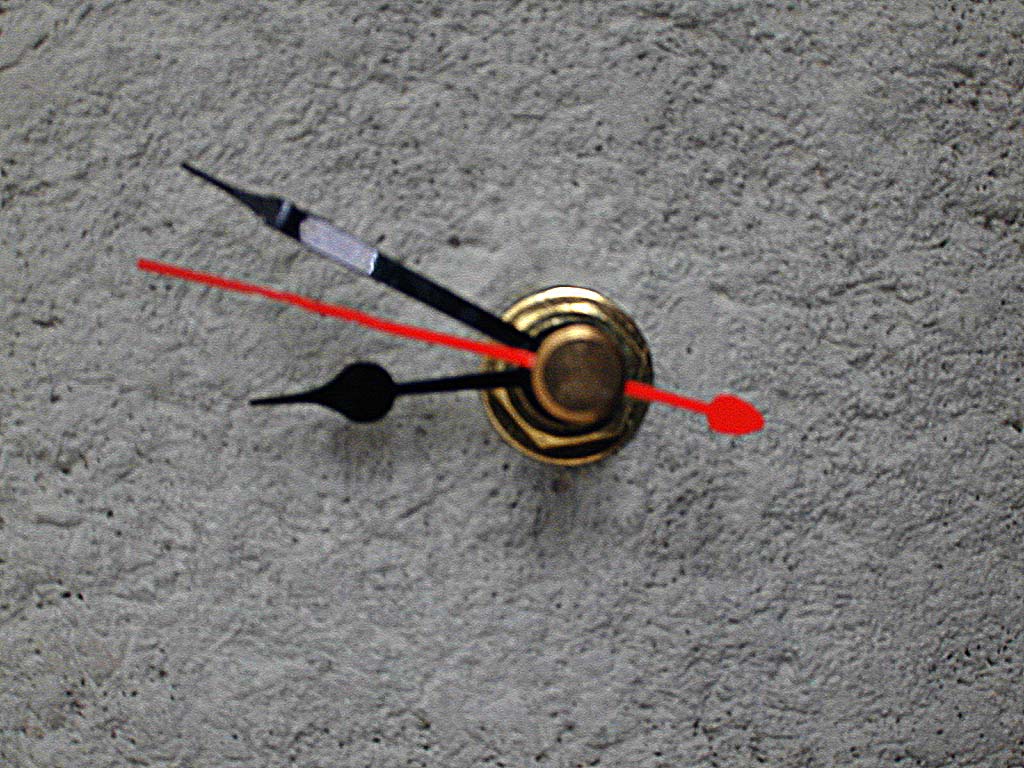
“Hell is the truth learned too late.”

(Thomas Hobbes)

After a three-year hiatus, I have returned to work on the novel.

It’s not so much for being driven as for having the lack of any other ideas about what to do with my life right now. Everything is in tremendous disarray. I need something to do that isn’t the same old thing. The novel is it.

It’s at about 190 pages so far. I hadn’t remembered it being that long.

I’m not sure what it reads like and I can’t even remember all of the intricacies of the characters and the plot. I’ll have to read it again myself before I begin work anew, but it has at least been moved into modern software and prepped for further work.

“I would instead argue for a middle ground between these two extremes. I suspect that freedom of will lies on a continuum, with some people having almost complete freedom in their actions, while others have relatively little freedom of will. Rather than viewing intent in black and white, all-or-nothing terms as the law (with few exceptions) does, it is likely that there are shades of gray, with most of us lying between the extremes. I would argue that early social, biological, and genetic mechanisms play substantial roles in shaping freedom of will… and that for some, freedom of will is constrained early in life due to brain dysfunction beyond their control. Brain dysfunction would be a primary process in constraining free will.”

(Adrian Raine)

Archives »

May 2026
April 2026
March 2026
February 2026
January 2026
December 2025
July 2025
May 2025
April 2025
February 2025
January 2025
December 2024
October 2024
September 2024
August 2024
July 2024
June 2024
May 2024
April 2024
March 2024
February 2024
January 2024
December 2023
November 2023
October 2023
September 2023
May 2023
April 2023
March 2023
January 2023
December 2022
November 2022
August 2022
June 2022
May 2022
April 2022
March 2022
January 2022
December 2021
November 2021
September 2021
April 2021
March 2021
February 2021
January 2021
December 2020
November 2020
October 2020
September 2020
August 2020
July 2020
June 2020
May 2020
April 2020
March 2020
February 2020
January 2020
December 2019
November 2019
October 2019
September 2019
August 2019
July 2019
May 2019
April 2019
March 2019
February 2019
January 2019
December 2018
November 2018
October 2018
September 2018
August 2018
July 2018
June 2018
May 2018
April 2018
March 2018
February 2018
January 2018
December 2017
November 2017
October 2017
September 2017
August 2017
July 2017
June 2017
May 2017
April 2017
March 2017
February 2017
January 2017
December 2016
November 2016
October 2016
September 2016
August 2016
July 2016
June 2016
May 2016
April 2016
March 2016
February 2016
January 2016
December 2015
June 2015
February 2015
January 2015
December 2014
October 2014
September 2014
August 2014
July 2014
June 2014
May 2014
April 2014
March 2014
February 2014
January 2014
December 2013
November 2013
September 2013
August 2013
July 2013
June 2013
May 2013
April 2013
March 2013
December 2012
November 2012
October 2012
August 2012
July 2012
June 2012
May 2012
March 2012
December 2011
October 2011
September 2011
August 2011
July 2011
June 2011
May 2011
April 2011
March 2011
February 2011
December 2010
November 2010
October 2010
September 2010
August 2010
July 2010
June 2010
May 2010
April 2010
March 2010
February 2010
January 2010
December 2009
November 2009
October 2009
September 2009
August 2009
July 2009
June 2009
May 2009
April 2009
March 2009
February 2009
January 2009
December 2008
November 2008
October 2008
September 2008
August 2008
July 2008
June 2008
May 2008
April 2008
March 2008
February 2008
January 2008
December 2007
November 2007
October 2007
September 2007
August 2007
July 2007
June 2007
May 2007
April 2007
March 2007
February 2007
January 2007
December 2006
November 2006
October 2006
September 2006
August 2006
July 2006
June 2006
May 2006
April 2006
March 2006
February 2006
January 2006
December 2005
November 2005
October 2005
September 2005
August 2005
July 2005
June 2005
May 2005
April 2005
March 2005
February 2005
January 2005
December 2004
August 2004
July 2004
June 2004
May 2004
April 2004
March 2004
February 2004
January 2004
December 2003
November 2003
October 2003
September 2003
August 2003
July 2003
June 2003
April 2003
March 2003
February 2003
January 2003
December 2002
November 2002
October 2002
September 2002
August 2002
May 2002
April 2002
March 2002
February 2002
January 2002
December 2001
November 2001
October 2001
September 2001
July 2001
June 2001
May 2001
April 2001
March 2001
February 2001
January 2001
December 2000
November 2000
October 2000
September 2000
August 2000
July 2000
June 2000
May 2000
April 2000
March 2000
February 2000
January 2000
December 1999
November 1999